Best Pressure Washer Surface Cleaners 2026: Flatwork Without the Stripes
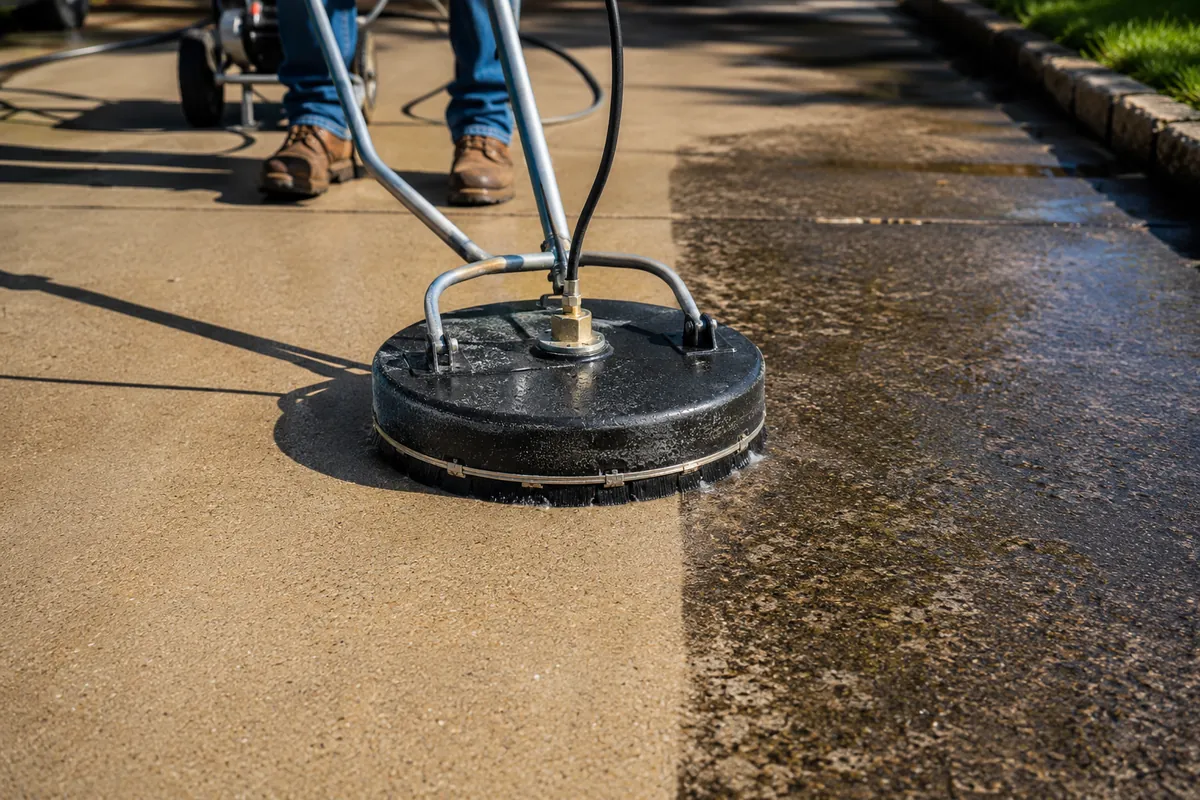
Pressure washer surface cleaner: it is a spinning bar with two nozzles tucked under a flat housing that drags across concrete on casters, and it beats a wand because it lays down one even pass instead of the zebra stripes a wand leaves behind. That is the short answer. The long answer is what separates a tool that lasts five seasons from a sixty dollar paperweight, and I have bought both, so let me save you the tuition.
I run a one-truck exterior cleaning business out of the Raleigh area. Twelve years in. I pull a surface cleaner across driveways, pool decks, and warehouse aprons most working days. I have worn out swivels, snapped casters, and once watched a no-name unit crawl to a stop on a job because I bought too big a cleaner for my machine. I learned the hard way so you do not have to.
If you are still picking the machine that feeds this thing, start with my best pressure washers guide first, because the cleaner is downstream of your GPM and getting that order wrong wastes money.
What A Surface Cleaner Actually Does
Picture two nozzles mounted on a bar that spins like a helicopter rotor inside a round shroud. Your machine feeds water in through a swivel at the top. The bar spins from the water pressure, the nozzles fire down at the concrete, and the whole housing rides on three or four casters so it stays a fixed distance off the surface. You walk it forward and it cleans a strip as wide as the housing in one shot.
Here is why I stopped using a wand on flatwork years ago:
- No stripes. A wand sprays a narrow fan. Overlap it wrong and you get the tiger-stripe look, lighter and darker bands that show up worse once the concrete dries. The customer sees it from the porch and you are out there re-doing it for free. A surface cleaner spins, so the dwell time is even across the whole width. No bands.
- Speed. I clean roughly five to ten times faster than a wand on open flatwork. A two-car driveway that took 45 minutes with a wand takes under ten with the right cleaner.
- Less fatigue. The wand kicks back into your wrist and shoulder all day. A surface cleaner you just push.
- Controlled overspray. The shroud keeps water and grime under the housing instead of blasting it onto the siding, the cars, and you.
The trade is that a surface cleaner only does flat, open areas. You still need a wand for edges, steps, vertical work, and tight corners. The two work together. Neither replaces the other.
Sizing To GPM Is The Thing Everyone Gets Wrong
This is the single biggest mistake I see. People buy the biggest surface cleaner they can find because bigger sounds faster, bolt it onto a homeowner machine, and then wonder why it crawls and stripes worse than the wand they were trying to escape.
A surface cleaner is a flow tool, not a pressure tool. The two nozzles inside it have to be fed enough water to spin the bar fast and keep the cleaning power up across the full width. Flow is GPM, gallons per minute. Match the cleaner width to your machine's GPM, not its PSI.
Buy too big a cleaner for your GPM and three bad things happen. The bar spins slow, so the nozzles dwell unevenly and you get stripes again, the exact problem you were solving. The cleaning power per square inch drops because you are spreading the same water over a wider path, so you crawl through multiple passes. And the unit physically drags because there is not enough flow to lift and glide it. I have felt all three on the same bad afternoon.
Here is the table I wish someone had handed me on day one.
| Cleaner Size | Required GPM | Best Use |
|---|---|---|
| 14 to 16 inch | 3 to 4 GPM | Homeowner electric or light gas. Driveways, patios, small decks. |
| 20 inch | 4 to 5.5 GPM | Prosumer gas. Side hustle, bigger residential, occasional commercial. |
| 24 inch | 5 to 8 GPM | Pro belt-drive gas. Daily commercial flatwork, warehouse aprons, large lots. |
Check the plate on your machine for the real GPM, not the marketing number on the box. If you are between sizes, go down, not up. A 16 inch cleaner running happy beats a 20 inch cleaner choking every single time. Not sure whether you even have the flow you think you have? My gas vs electric breakdown walks through why electric machines almost never push enough GPM for anything past a 16 inch unit.
The Swivel Is The Part That Actually Fails
Everybody shops the housing diameter and the price. Almost nobody asks about the swivel, and the swivel is the part that kills these tools.
The swivel is the joint at the top center where the stationary hose meets the spinning bar. It has to seal high pressure water while the bar rotates thousands of times a session. That is a hard job for a small part. On a cheap cleaner that swivel is a sealed plastic-bodied unit with bargain bearings and seals you cannot reach. It will leak, then it will seize, and when it seizes the bar stops and you are done. On the throwaway units there is no fixing it. You buy a whole new cleaner.
A quality swivel is the line between a sixty dollar disposable tool and one that earns for years. Here is what I look for now:
- Rebuildable swivel. This is the big one. A good swivel takes a seal and bearing kit that costs a few dollars, and you can rebuild it on the tailgate in fifteen minutes. When it wears, and it will, you rebuild it instead of landfilling the whole cleaner. Brands like General Pump and MTM Hydro sell these.
- Stainless steel housing over plastic. Plastic shrouds crack when you clip a curb or a downspout, and you will clip them. Stainless takes the abuse. Mine has bounced off plenty of concrete steps and it is fine.
- Caster quality. Cheap casters bind with grit and flat-spot fast, and then the cleaner rides crooked and stripes. Good sealed casters with replaceable wheels keep the housing level and gliding.
- Replaceable nozzles. The two spray nozzles wear and they should thread out so you can swap them for the right size for your GPM. Sealed units lock you into one flow forever.
If a listing will not tell you whether the swivel rebuilds, assume it does not. That is your answer.
My Picks By Tier
I am not going to pretend I have run every unit on the market. These are the names that show up on real trucks and hold up, sorted by who they are for. Match the size to your GPM table above before you click anything.
Homeowner And Light Gas (14 to 16 inch)
If you have a 3 to 4 GPM machine, you live here. Do not size up.
- The Karcher 15 inch surface cleaner is a sane pick for an electric or small gas unit. Plastic-bodied but honest about what it is.
- The Simpson 15 inch surface cleaner takes up to around 4 GPM and pairs nicely with the gas machines Simpson sells. Solid casters for the price.
- The DeWalt universal surface cleaner is a fine homeowner-grade option if you already run their machine and want the quick connect to just work.
Prosumer (20 inch)
You have a real gas machine pushing 4 to 5.5 GPM and you are cleaning for money on weekends or part time.
- The BE Whirlaway 20 inch surface cleaner is the one I point people to first at this size. Good value, decent swivel, and it moves real square footage. The Whirlaway line has been a workhorse name in this trade for a long time.
- The MTM Hydro 21 inch stainless surface cleaner steps up the build with a stainless housing and a swivel you can service. Costs more, lasts longer, and that is the whole point of this article.
Pro (24 inch)
Daily commercial flatwork on a belt-drive machine pushing 5 to 8 GPM. This is my world.
- The General Pump 24 inch surface cleaner runs a genuinely rebuildable swivel and stainless construction. This is a buy-it-for-the-decade tool, not a buy-it-twice tool.
- The BE 24 inch whirlaway surface cleaner is the bigger brother of the prosumer pick and it eats warehouse aprons. Make sure your machine actually has the flow before you go this wide.
And whatever tier you land in, keep a surface cleaner swivel rebuild kit and a set of pressure washer surface cleaner replacement nozzles on the truck. Both are cheap insurance and both will save a job someday.
The Honest Do-Not-Buy List
I would rather tell you what to avoid than hype something you do not need.
- The no-name 20 inch cleaner on a 2.5 GPM machine. This is the classic blunder. The listing promises a wide path on a budget, you bolt it to a homeowner electric or a small gas unit, and it crawls and stripes worse than your wand. No surface cleaner fixes a flow problem. Buy for your GPM.
- Anything with a sealed, non-rebuildable swivel. When that swivel seizes, and it will, you throw the whole tool away. You are not buying a tool, you are renting one until the first failure.
- All-plastic housings if you are doing this for money. Hobby use, fine. Daily use, the plastic cracks the first time you misjudge a step or a curb, and you misjudge them.
- Mystery casters. If the listing does not show real casters with replaceable wheels, expect them to flat-spot and bind. Crooked ride equals stripes.
None of these are scams exactly. They are just the wrong tool for someone trying to do real work, and the price tag hides the cost you pay later.
How I Run Mine On The Job
The tool is half of it. Technique is the rest. A few things I have learned dragging these across NC concrete week after week.
- Keep it flat. The design depends on the housing staying parallel to the surface so both nozzles dwell evenly. Tip it and you stripe. On a slope, slow down and let it sit level.
- Overlap your passes. I lap each pass two to three inches into the last one. The edge of the path is always the weakest cleaning zone, so the overlap covers it. Skip it and you leave faint clean-line tracks.
- Pre-treat first. On oily or mildewed concrete I down the surface with a detergent or a sodium hypochlorite mix and let it dwell before the cleaner ever touches it. The cleaner rinses and agitates, it does not do chemistry. Pre-treat does the chemistry and your passes go twice as fast.
- Mind where the wash water goes. A surface cleaner kicks loose a lot of dirty water full of oil, soap, and grime, and most storm drains run straight to a creek or river untreated. Under the EPA stormwater program, letting that runoff hit a storm drain can put you on the wrong side of the law, especially on commercial lots. On dirty flatwork I block the drain and vacuum or divert the slurry to landscaping or sewer instead.
- Ease off on delicate surfaces. Do not run full pressure on soft pavers, old brick, or anything with sand-set joints. It will blast the jointing sand out and chew the paver face. Drop your pressure, raise the housing if it adjusts, or go back to a wand at distance.
- Walk a steady pace. Too fast and you under-clean, too slow and you can flash-etch concrete on a hot pump. Find the speed where one pass comes clean and hold it.
If you want to know what all this is worth charging for, I broke the numbers down in my pressure washing prices guide, and if you are thinking about turning this into a business, the how to start a pressure washing business walk-through covers the gear-to-income math.
Frequently Asked Questions
What size surface cleaner do I need for my pressure washer?
Match the cleaner width to your machine's GPM, not its PSI. A 3 to 4 GPM machine wants a 14 to 16 inch cleaner, 4 to 5.5 GPM wants a 20 inch, and 5 to 8 GPM wants a 24 inch. If you are stuck between two sizes, go smaller. A right-sized cleaner running happy beats an oversized one choking every time.
Why does my surface cleaner leave stripes?
Almost always it is starved for flow. The bar is spinning too slow because the cleaner is too wide for your GPM, so the nozzles dwell unevenly and leave lighter and darker bands. Other causes are a tipped or unlevel housing, worn or wrong-size nozzles, and binding casters that ride the unit crooked. Fix the flow match first, then check that you are keeping it flat and overlapping your passes.
Can I use a surface cleaner on an electric pressure washer?
Yes, but only a small one. Most electric machines top out around 1.1 to 2.0 GPM, which limits you to a 14 or 15 inch cleaner, and even then it works best on the higher-flow electrics near 2 GPM. Bolt a 20 inch cleaner onto an electric and it will crawl and stripe worse than the wand you were trying to replace.
How long should a pressure washer surface cleaner last?
A cheap sealed-swivel unit often dies in a season or two when the swivel seizes and cannot be rebuilt. A quality cleaner with a rebuildable swivel and a stainless housing lasts many years because the part that wears, the swivel, takes a few-dollar seal and bearing kit you swap on the tailgate. The difference is the swivel, not the price tag on the box.
Can a surface cleaner damage concrete or pavers?
It can. Too slow a pass on a hot pump can flash-etch concrete, and full pressure on soft pavers or old brick will blast out the jointing sand and chew the surface. Keep a steady pace on concrete, and on delicate surfaces drop your pressure, raise the housing if it adjusts, or go back to a wand held at distance.
Do I need to buy the same brand cleaner as my pressure washer?
No. Surface cleaners connect through a standard quick connect and are brand-agnostic. What matters is the GPM match, a rebuildable swivel, and build quality, not whether the logo matches your machine. Buy the best cleaner for your flow, regardless of who made the washer.
Where I Land On It
A surface cleaner is the easiest upgrade you can make to your flatwork, full stop. It kills the wand stripes, it cleans many times faster, and it saves your shoulder. But the box-store instinct to buy the biggest, cheapest one is exactly backward. Buy for your GPM, not your ego. A right-sized cleaner with a rebuildable swivel and a stainless housing will outlast three of the disposable units and cost you less over its life, because the swivel is the part that fails and a good one you just fix.
If you remember nothing else: match the size to your machine's flow, and ask whether the swivel rebuilds before you buy. Get those two right and the rest is just keeping it flat and overlapping your passes. That is the whole trade, and it has paid my bills for twelve years.