Gas vs Electric Pressure Washer: Which One You Actually Need
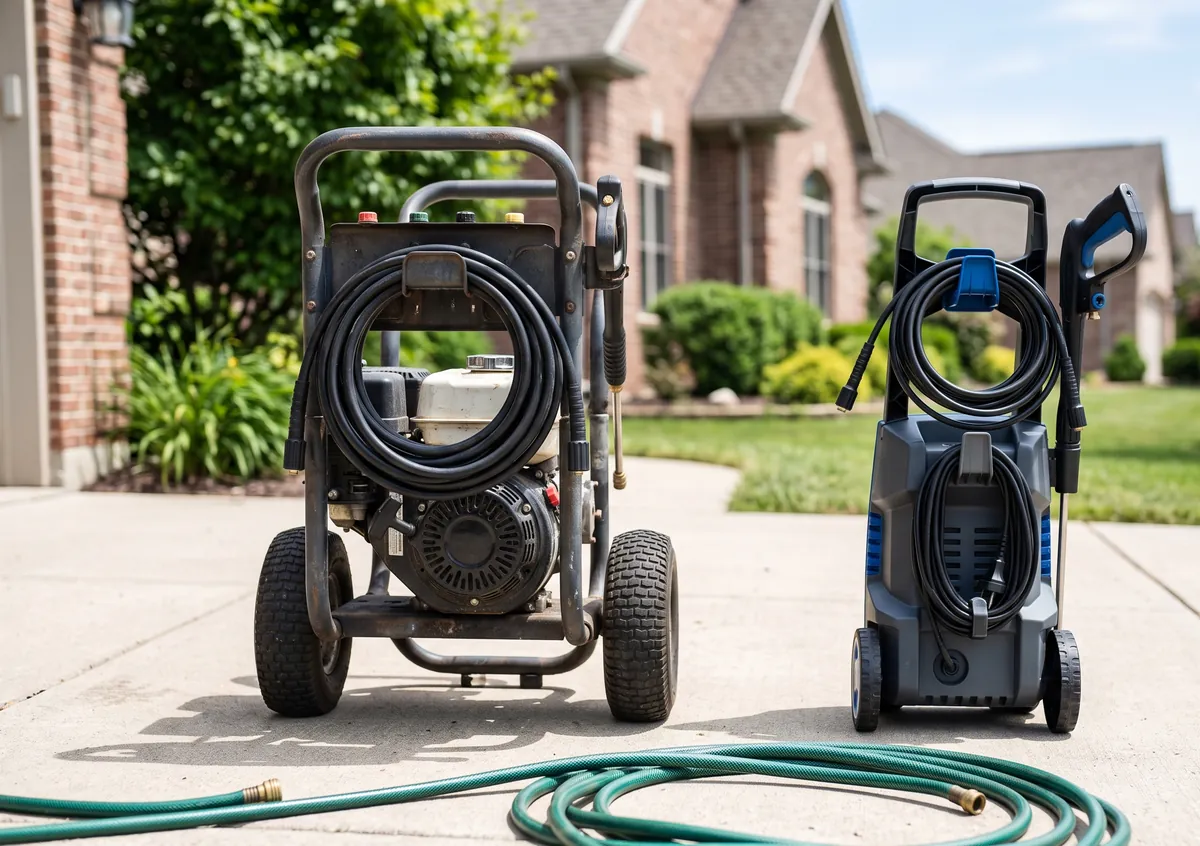
Gas vs electric pressure washer: electric is the right call for most homeowners cleaning a deck, a patio, a fence, and the occasional car, while gas is what you want for big house washes, long driveways, and any kind of paid work. That is the short version. The longer version is worth your time, because I have watched a lot of people buy the wrong machine and then either fight it for years or replace it in one season.
I run a one-truck exterior cleaning business outside Raleigh. Twelve years in. I pressure wash and soft wash houses, driveways, decks, patios, fences, and commercial flatwork. I have worn out cheap electric units and I have killed gas pumps by being careless. I do not care which brand you buy and I do not get loyal to logos. I care about durability and cost per job. So that is the lens I am going to use here.
The number that actually decides it is GPM, not PSI
Almost everybody shopping for a pressure washer fixates on PSI. Pounds per square inch. The big number on the box. I get why. It sounds like power and it is easy to compare. But PSI is not the number that decides whether a machine is right for your work. GPM is.
GPM is gallons per minute. It is the flow. PSI is the punch that knocks dirt loose, but GPM is what carries that dirt away and how fast you cover ground. A machine with high PSI and low flow will clean a small spot well and take forever to do anything big. A machine with strong flow finishes the job before you lose the daylight.
Here is the rough split:
- Electric tops out around 1.1 to 2.0 GPM. Most homeowner electrics live at the low end of that.
- Gas runs 2.3 to 4 GPM and up. Even an entry gas unit usually beats the best electric on flow.
So the real question is not gas or electric. The real question is how much square footage you clean and how often. A small back patio and a couple of lawn chairs is a different animal than a 60-foot driveway and a two-story house with vinyl siding.
Electric pressure washers: the honest pros and cons
I keep a decent electric on the truck for tight detail work and times when I cannot run a gas engine near a customer. They have a real place. They are not toys, but they are not what they are not.
What I like about electric:
- Quiet. You can have a conversation next to one. On a Saturday in a packed neighborhood, that matters more than people think.
- Light and easy to move. Most homeowner electrics are under 35 pounds. You carry it up the deck stairs with one hand.
- Almost no maintenance. No oil, no fuel, no winterizing the engine, no carburetor to gum up if you forget about it for six months.
- Start and stop instantly. Pull the trigger, it runs. Let go, it stops. No idling, no warmup. Good for stop-and-go detail work.
- You can run it on a porch or in a garage with the door open. No exhaust. That alone makes it the right tool for some jobs.
Where electric falls down:
- You are tied to a cord. And usually a hose and a power cord both, so two leashes. Cheap extension cords starve the motor and shorten its life, so you need a heavy gauge cord, which is one more thing to buy.
- GPM is capped. This is the big one. You will feel it the moment you try to wash a whole house or a long driveway. It just takes longer.
- It struggles with real volume. A full two-story soft wash or 1,500 square feet of concrete is slow and tiring with an electric.
- Cheap motors burn out. This is the part nobody tells you. The bargain-bin electrics with a universal motor are built to a price, and if you lean on them for hours they overheat and die. The induction-motor units last a lot longer but cost more.
If you want a solid homeowner electric, I would look at something like a Sun Joe electric pressure washer for light duty, or step up to a Greenworks induction motor pressure washer if you want it to survive heavier use. The Ryobi electric pressure washer line sits in the middle and is easy to find parts for.
Gas pressure washers: the honest pros and cons
Gas is what I run for production. When I am getting paid by the job, flow is money, and gas gives me flow.
What I like about gas:
- High GPM. A 2.5 to 4 GPM gas unit cleans fast. You cover ground. A driveway that takes an hour with a homeowner electric takes a fraction of that with a good gas machine and a surface cleaner.
- No cord. You go wherever the hose reaches. No outlet hunting, no tripping a breaker.
- It soft washes a whole house off one tank. That flow lets you push cleaning solution through a long hose and reach second-story siding without choking.
- It earns its keep on volume. If you are cleaning hours a day, the speed pays for the machine.
Where gas falls down:
- Loud. No way around it. Ear protection is not optional for a full day.
- Heavy. A gas unit on a cart can run 60 to 80 pounds or more. You are not carrying it up deck stairs one-handed.
- Real maintenance. Oil changes, fuel stabilizer, winterizing, carburetor care, pump oil. Skip it and you will pay for it. I have killed pumps by running them dry and by ignoring winter. Learn from that.
- Fumes. Never run it indoors or in a closed garage. Ever. Carbon monoxide is not something to gamble with, and the Consumer Product Safety Commission logs deaths every year from gas pressure washers and generators run in or near enclosed spaces. Keep the engine outdoors and well away from open windows and doors. This is a hard line, not a suggestion.
- It costs more up front. Both the machine and the upkeep.
There is also a pump question that decides how long a gas unit lives. Axial cam pumps are what come on most consumer and prosumer gas units. They are fine for homeowner use and light commercial, but they are not built to run all day every day. Triplex pumps cost more, run cooler, and are rebuildable. If you are starting a business, you want triplex, full stop. If you are a homeowner washing your own place a few times a year, axial is plenty and you do not need to spend the extra money.
For gas, the Simpson gas pressure washer line is where a lot of pros and serious homeowners land for the money. A DeWalt gas pressure washer with a triplex pump is a workhorse if you want to push toward commercial duty. And if you want the engine that has earned its reputation, look for a unit with a Honda GX engine pressure washer. The engine outlasts everything else on the frame.
Side by side
Here is the comparison the way I would explain it to a customer in their driveway.
| Factor | Electric | Gas |
|---|---|---|
| Noise | Quiet, conversation-level | Loud, ear protection needed |
| GPM (flow) | 1.1 to 2.0 | 2.3 to 4+ |
| Water source | Garden hose | Garden hose, but uses more water with the higher flow |
| Maintenance | Almost none | Oil, fuel, pump care, winterizing |
| Lifespan | Cheap motors burn out, induction motors last | Axial pump shorter, triplex pump rebuildable and long |
| Cost | Lower up front | Higher up front and to maintain |
| Portability | Light, carry one-handed | Heavy, lives on a cart |
| Indoor or covered use | Yes, no exhaust | No, never, fumes |
No single column wins. It depends entirely on your work.
House and roof washing is soft washing, and that changes the math
This trips people up, so I want to be clear about it. You do not blast a house or a roof with high pressure. You will tear up siding, drive water behind it, and strip shingles. House and roof cleaning is soft washing.
Soft washing means low pressure and the right chemistry. We use sodium hypochlorite (the active ingredient in bleach) mixed with a surfactant to help it cling and rinse clean. The cleaning is done by the solution, not the force. What you need from the machine is flow to apply and rinse, not raw PSI.
That favors gas for pros, because flow is exactly what gas gives you. I can soft wash a whole two-story off one tank because the machine moves enough volume to keep the solution coming and rinse it all down.
But here is the honest part for homeowners: you do not need a gas rig to soft wash a one-story house. A decent electric for rinsing plus a separate pump sprayer for applying the mix will get a single-story house clean. It is slower and more manual, but it works, and it is a lot cheaper than buying a gas machine you will use twice a year. A simple soft wash pump sprayer plus your electric covers a lot of homeowner soft washing.
The two mistakes I see most
I want to call out the two purchases I see go wrong over and over, because both of them waste money.
Do not buy a 3,000-plus PSI gas unit to clean a small townhouse patio. It is too much machine. It is loud, it is heavy, it needs maintenance you will resent, and a high-PSI gun in untrained hands will etch your concrete and shred your deck boards. For a small patio and some furniture, a homeowner electric is the right tool and you will actually use it because it is easy to pull out.
Do not buy a cheap electric to start a business. I do not care how good the reviews are. A bargain electric will not move enough water to make you money, and the motor will not survive a real workday repeated five days a week. You will burn it out inside a season, lose jobs to slow production, and end up buying the gas unit you should have bought first. If this is paid work, buy gas with a triplex pump and treat the maintenance schedule like it matters, because it does.
If you want to see the specific units I would put on a shortlist for either side, I keep a running list in my best pressure washers for 2026 writeup. And if driveways and flatwork are most of your work, a surface cleaner attachment matters more than the machine, which I cover in the best pressure washer surface cleaner guide.
Cost over the life of the machine, not the sticker
People compare prices wrong. They look at the sticker and stop there. The real cost is sticker plus upkeep plus how long it lasts plus what it does for you.
A homeowner electric is cheap to buy and cheap to keep. If you use it a handful of times a year on your own property, the low maintenance and the low price make it the better total value. You are not running enough hours to need anything more.
A gas unit costs more up front and costs you oil, fuel, and pump care over time. But if you are cleaning for money, it pays that back fast in production speed, and a triplex pump can be rebuilt instead of replaced. If you are thinking about turning this into income, I walked through the numbers and the startup gear in how to start a pressure washing business in 2026, and what those jobs actually bill in my pressure washing prices for 2026 breakdown.
For a homeowner who wants gas-level flow without going full commercial, a mid-range 2.5 GPM gas pressure washer is a sensible middle ground. Enough flow to wash a house and a driveway, not so much machine that it becomes a chore.
Frequently Asked Questions
Is a gas or electric pressure washer better?
It depends entirely on the work. Electric is better for most homeowners cleaning a deck, patio, fence, and a car or two: it is quiet, light, and needs almost no maintenance. Gas is better for big house washes, long driveways, and any paid work, because it pushes far more flow. Match the machine to the square footage you actually clean and how often you clean it.
Do I need a gas pressure washer to wash my house?
Not for a single-story house. A decent electric for rinsing plus a separate pump sprayer for applying a soft wash mix will clean a one-story home, just slower and more by hand. Gas earns its keep on two-story work and anything you are paid for, because the higher flow lets you push solution up the wall and rinse it all without choking.
How much more does a gas pressure washer cost to own than electric?
More both up front and over its life. A homeowner electric is cheap to buy and costs almost nothing to keep. A gas unit costs more to buy and then adds oil, fuel, pump care, and winterizing. If you only clean a few times a year, electric is the better total value. If you are cleaning for money, gas pays that back fast in production speed and a triplex pump can be rebuilt instead of replaced.
Are electric pressure washers powerful enough for concrete?
For a homeowner driveway or patio, yes, but slowly. Electrics cap out around 1.1 to 2.0 GPM, so they clean flatwork at a fraction of the speed of a gas machine with a surface cleaner. They are fine for occasional personal use. They are not enough to clean concrete for money, where low flow costs you jobs and burns out the motor.
Why does GPM matter more than PSI?
PSI is the punch that knocks dirt loose, but GPM is the flow that carries it away and decides how fast you cover ground. A high-PSI, low-flow machine cleans a small spot well and takes forever on anything big. Strong flow finishes the job before you lose daylight. For real production, buy GPM and stop chasing the big PSI number on the box.
Can I run a gas pressure washer in my garage?
No. Never run a gas engine indoors or in a closed or partly closed garage. The exhaust contains carbon monoxide, which is odorless and can kill you. Run gas machines outdoors, away from open windows and doors. Only an electric, which has no exhaust, is safe to run in a garage with the door open.
Who should buy which
No tidy bow here, just straight answers.
Buy electric if: you are a homeowner cleaning a deck, a patio, a fence, some furniture, and a car or two. You want something quiet you can pull out in fifteen minutes, run near the house, and put away without thinking about oil or fuel. Spend a little extra for an induction motor if you can. It will outlast the cheap units by years.
Buy gas if: you have a long driveway, a lot of flatwork, a two-story house you want to soft wash yourself, or any plan to get paid for this. Get enough GPM to move real volume, and if it is for work, get a triplex pump and respect the maintenance.
The honest middle: plenty of homeowners are fine with a good electric plus a pump sprayer for occasional soft washing, and never need gas at all. And plenty of people who think they need a giant gas unit for one small patio would be happier and richer with an electric. Match the machine to the square footage you actually clean and how often you clean it. Do that, and you will buy once instead of twice. I have done it the expensive way so you do not have to.