Best Pressure Washers 2026: What I Actually Run
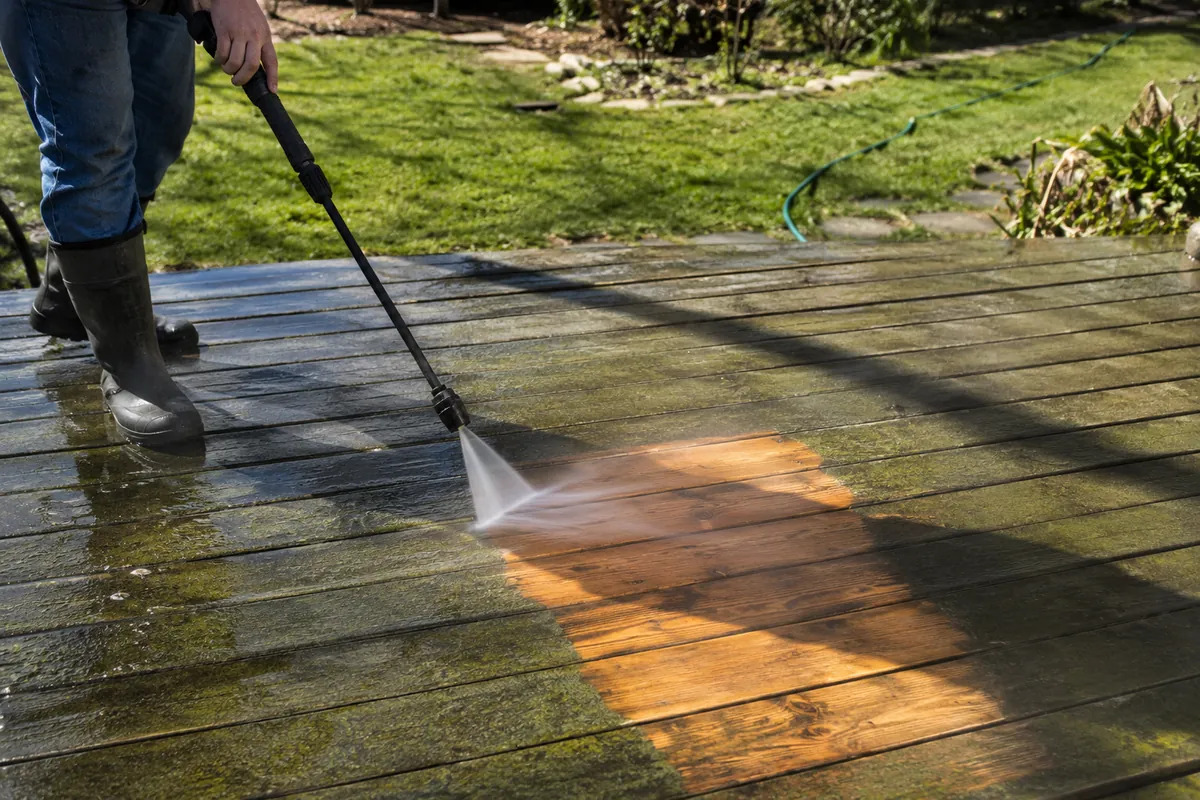
Best pressure washer: for daily paid work it is a 4 GPM cold-water gas rig with a Honda GX270 or GX390 engine and a triplex pump (AR or CAT), and for a homeowner cleaning a driveway twice a year it is a mid-tier electric like a Sun Joe or Ryobi. Those are two completely different buyers, so I am going to keep them separate instead of pretending one machine fits everyone.
I have been cleaning the outside of houses around Raleigh for 12 years. One truck, mostly me, sometimes a helper. I pressure wash and soft wash: houses, roofs, driveways, decks, patios, fences, and a fair amount of commercial flatwork (gas stations, restaurant pads, dumpster corrals). In that time I have worn out two big-box machines, killed a pump by running it dry, and learned most of this the expensive way. I do not care what brand is on the pump as long as it pays for itself. So that is the lens here: durability and cost per job, not loyalty.
Read the spec that actually matters
Walk into any home center and the pressure washers are stickered with one giant number: PSI. 3000 PSI. 4000 PSI. The marketing knows you will reach for the bigger one. That is the wrong number to chase.
PSI is pressure. GPM is flow (gallons per minute). The thing that determines how fast you actually clean is the two of them multiplied together, which people call cleaning units:
> Cleaning Units = PSI x GPM
Here is the part most homeowners get backwards. PSI knocks a stain loose. GPM carries it away and lets you cover ground. A machine with high PSI and low flow blasts a tiny stripe and you stand there all afternoon. A machine with lower PSI and more flow rinses a whole driveway in a fraction of the time. Flow is what makes a job feel fast.
Quick comparison of the same idea:
| Setup | PSI | GPM | Cleaning Units | What it feels like |
|---|---|---|---|---|
| Cheap electric | 2000 | 1.2 | 2,400 | Fine for a car or a small patio, slow on concrete |
| Good electric | 2300 | 2.0 | 4,600 | Real homeowner workhorse |
| Big-box "4000 PSI" gas, axial | 4000 | 3.5 | 14,000 | Strong on paper, pump dies young |
| My work rig | 3500 | 4.0 | 14,000 | Same cleaning units, runs all day for years |
Notice my rig and the scary 4000 PSI box-store unit land at the same cleaning units. The difference is not the cleaning. It is whether the machine is still alive next spring. More on that below.
If you only remember one thing: stop overbuying PSI and start buying GPM. For house and flatwork I would take 3.5 to 4.0 GPM at 3000 to 3500 PSI over 4000 PSI at 3 GPM every single time.
Electric pressure washers for homeowners
If you own a home, wash a couple of cars, hit the patio and driveway a few times a year, and clean some lawn furniture, you do not need gas. You need an electric that will not embarrass itself and will not die in three uses. Electrics top out around 1.1 to 2.0 GPM because they run on a standard 120V outlet, and that flow ceiling is the real limit, not the PSI number on the box.
A few honest notes on electrics before the picks. You are tethered to an outlet and a garden hose, so plan your reach. Use a heavy 12-gauge outdoor extension cord and keep it short, because a long thin cord starves the motor and burns it out. And your garden hose has to actually keep up: if the inlet water dribbles, the pump cavitates and grinds itself down.
Entry level, occasional use:
- Sun Joe electric pressure washer. Cheap, light, fine for cars and small patios. Mostly plastic. Treat it as disposable and you will not be disappointed. I keep one in my own garage for quick personal stuff.
- Greenworks electric pressure washer. Same tier, slightly better build on the mid models. Good if you want a brand with decent parts availability.
- Ryobi electric pressure washer. If you already live in the Ryobi battery ecosystem the corded units are a sensible pick, and the brushless models hold up better than the bargain stuff.
Step up, if you actually use it:
- Ryobi 2300 PSI brushless electric pressure washer. A brushless motor and a metal pump head get you closer to 2.0 GPM and a machine that survives real seasonal use. This is the one I point neighbors to when they ask. It is the sweet spot for a homeowner: enough flow to clean a driveway in an afternoon, not so much money you cry when it eventually wears out.
What I tell people: buy the electric that has the highest GPM you can find in your budget, plug it into a short fat cord, feed it a wide-open garden hose, and accept that even the good ones are slow on big concrete. That is the tradeoff for not owning gas.
Gas pressure washers: prosumer and pro
Once you are charging money, or you have a long driveway plus a lot of flatwork, gas is the move. But gas splits hard into two camps, and the split is the pump, not the engine.
Axial pump vs triplex pump
This is the whole ballgame, so I am going to be blunt.
An axial pump is what comes on nearly every gas unit under about 500 dollars. The pistons sit in line with the engine shaft, it runs hot, it is not really designed to be rebuilt, and it is rated in hours, not years. For a homeowner doing a weekend a couple times a year, an axial pump is genuinely fine and I would not talk you out of it.
A triplex pump (the good ones are AR or CAT) has three ceramic plungers, runs cooler, sips oil you can actually change, and is built to be rebuilt instead of thrown away. Triplex pumps are what every working contractor runs because they survive 6, 8, 10 hours a day. They cost more up front and they are worth every dollar if the machine pays you.
I killed an axial-pump machine in my second year. Ran it a full commercial day, two or three days a week, and the pump was toast inside a season. The triplex I replaced it with is still running. That single mistake is why I lead every conversation with the pump.
Prosumer gas picks
If you are a serious homeowner or just starting a side hustle and you want gas without going full commercial:
- Simpson PowerShot 4200 PSI 4.0 GPM Honda GX390 pressure washer. 4200 PSI at 4.0 GPM, Honda GX390, AAA industrial triplex pump. This is a legitimate pro machine at a fair price, and the AAA triplex is rebuildable. Honestly more PSI than you need for house work, but the 4.0 GPM is the part that matters.
- DeWalt 4400 PSI 4.0 GPM Honda GX390 pressure washer. The DXPW4400 class: 4.0 GPM, Honda GX390, AAA triplex, welded steel frame. Same idea as the Simpson, slightly burlier cart. Pick whichever is cheaper the week you buy.
- Honda GX270 pressure washer. If you can find a 3.5 to 4.0 GPM unit on a GX270 with a triplex pump, that is plenty of engine for cold-water flatwork and a touch easier to pull-start than the bigger 390.
What I actually run
My daily machine is a roughly 4 GPM cold-water belt-drive rig: Honda GX270-class engine, AR triplex pump. Belt drive means the pump spins slower than the engine, which keeps the pump cooler and makes it last even longer than a direct-drive triplex. It is heavier and it cost more, and I would buy it again tomorrow.
Two things keep that pump alive that have nothing to do with the brand: I never let it run dry (dry running wrecks the seals in seconds), and I do not hold the trigger closed for more than a minute or two because that builds heat in the bypass loop. A 7-dollar habit of pulling the trigger to dump heat has saved me a 200-dollar pump rebuild more than once.
When a triplex does eventually wear, you do not buy a new machine, you buy a pump:
That rebuildability is the entire reason to pay up front.
Hot water vs cold water
Short version: cold water cleans almost everything in residential exterior work, and that is what I run daily. Hot water earns its keep on grease and oil: restaurant pads, drive-thru lanes, gas station aprons, fleet equipment, gum on sidewalks. Heat breaks down oil in a way cold pressure simply cannot match.
A hot-water machine costs a lot more, it is heavier, and it adds a burner and fuel to maintain. If you are doing houses and home driveways, skip it. If you are chasing commercial grease accounts, a hot-water unit pays for itself fast. I rent one for the rare grease job rather than owning a second rig, and that math works for a one-truck operation. If you are deciding between the two, read my gas vs electric pressure washer breakdown first, because most people asking about hot water actually just need more flow.
Do not buy these
I want to be fair, so here is where I would tell you to keep your money.
- The cheapest big-box "4000 PSI" gas unit with an axial pump, if you plan to use it for work. It will clean great for a few months and then the pump fails, and you cannot rebuild it economically. For occasional homeowner use it is fine. For paid or near-daily use it is a trap.
- Anything bought purely for a giant PSI number. Chasing 4000 PSI for house work is how people etch concrete, splinter wood decks, and blast the paint off siding. You do not need it.
- No-name machines with a pump brand you cannot identify. If the listing will not tell you whether the pump is axial or triplex, and will not name the pump maker, assume it is the cheap one. Parts will not exist when it breaks.
- A pressure washer at all, for your house and roof. This is the big one. Read the next section.
Houses and roofs get soft washed, not blasted
This is the mistake that does the most damage, and the most expensive callbacks I have ever cleaned up after came from a homeowner who rented a gas machine and turned a 0-degree tip on their own siding.
Houses, roof shingles, screens, soffits, and most painted or wood surfaces get soft washed. Soft washing is low pressure (basically garden-hose pressure at the surface) plus a cleaning mix: sodium hypochlorite (the same active ingredient as pool chlorine or bleach) cut to the right strength, with a surfactant added so it clings and dwells. The chemistry kills the algae, mildew, and that black gunk. You are not blasting the stain off, you are killing the organism and rinsing it. That is why a soft-washed roof stays clean for years and a power-washed one grows back fast and loses granules in the process.
Raw pressure belongs on hard, non-porous surfaces: concrete driveways, sidewalks, brick, block, and commercial flatwork. That is where a surface cleaner attachment and real GPM shine, and where high PSI is actually appropriate. Everything soft and vertical gets the gentle treatment.
And respect the machine while you are at it. A pressure washer stream is strong enough to cut skin and inject debris under it, which is a real injury the Consumer Product Safety Commission tracks every year. Never point the gun at yourself or anyone else, never aim near your feet, and wear closed boots and eye protection. A high-pressure injection wound can look like a tiny puncture and still send you to the ER.
If you take nothing else from this article: match the method to the surface. Flatwork gets pressure. Houses and roofs get chemistry. Get that wrong and you will pay for siding, paint, or a roof.
Frequently Asked Questions
What is the best pressure washer for home use?
For most homeowners it is a mid-tier electric in the 2.0 GPM range with a brushless motor and a metal pump head, like a Ryobi 2300 brushless. It has enough flow to clean a driveway in an afternoon, no engine to maintain, and it is cheap enough that wearing it out does not hurt. You only need gas if you have a long driveway, a lot of flatwork, or plan to get paid.
Is more PSI always better in a pressure washer?
No, and chasing PSI is the most common buying mistake. PSI knocks a stain loose, but GPM (flow) carries it away and is what makes a job feel fast. A 4000 PSI machine at 3 GPM cleans no faster overall than a 3500 PSI machine at 4 GPM, and the high-PSI bargain units usually have weaker pumps that die young. Buy flow, not pressure.
What GPM do I need for a pressure washer?
For homeowner work, 1.5 to 2.0 GPM from a good electric handles cars, patios, and driveways. For paid or near-daily work, you want a gas rig at 3.5 to 4.0 GPM or more, because flow is what lets a surface cleaner run without crawling and lets you soft wash a whole house off one tank. Flow is the spec that determines how much ground you cover.
Axial pump or triplex pump, which should I buy?
For a homeowner washing a few times a year, an axial pump is genuinely fine and saves money. For any paid or near-daily use, buy a triplex pump (AR or CAT are the good ones). Triplex pumps run cooler, last years instead of a season, and are built to be rebuilt instead of thrown away. The pump, not the engine, decides how long a working machine survives.
Can I pressure wash my house and roof?
No, not with high pressure. Houses, roofs, screens, and most painted or wood surfaces get soft washed: low pressure plus a sodium hypochlorite and surfactant mix that kills the algae and mildew, then a gentle rinse. Blasting siding drives water behind it, and blasting a shingle roof strips the granules and shortens its life. Match the method to the surface or you will pay for the damage.
How long should a gas pressure washer last?
With a triplex pump and basic care it lasts many years of daily use, because the pump can be rebuilt rather than replaced when it wears. The two habits that keep a pump alive are never running it dry, which wrecks the seals in seconds, and not holding the trigger closed for more than a minute or two, which builds heat in the bypass loop. A cheap axial-pump unit run daily often dies inside a single season.
Wrapping up
For most people reading this, the honest answer is a mid-tier electric like the Ryobi 2300 brushless: enough flow to clean a driveway, cheap enough that wearing it out does not hurt, and no engine to maintain. If you are starting to charge money, go straight to a 4 GPM gas rig with a Honda engine and an AAA, AR, or CAT triplex pump, and skip the axial-pump bargain units entirely because the pump is the part that decides whether the machine survives. Buy flow, not PSI. And remember that your house and roof want soft washing, not a 0-degree tip.
If you are thinking about turning this into income, I wrote up how the money actually works in pressure washing prices for 2026 and how to start a pressure washing business in 2026. And if you would rather just hire it done right, the operators in our directory soft wash the soft stuff and save the pressure for the concrete.